How to Check if a Service Provider is Legit Before You Pay (India Guide)
I have noticed a significant shift in how we work in India lately. More businesses and individuals are hiring freelancers,…
I have noticed a significant shift in how we work in India lately. More businesses and individuals are hiring freelancers, digital agencies, and consultants than ever before. While this has opened up incredible opportunities, it has also created a playground for a new breed of scammers. I see stories every week of people losing anywhere from 5,000 to 5 lakhs to “service providers” who vanish the moment the first payment hits their account.
The sting of a service scam is often worse than an e-commerce scam because it involves a breach of professional trust. You aren’t just losing money; you are losing time and often the progress of your own business. If you are currently looking to buy products rather than hiring for a service, you should see our guide on how to identify fake e-commerce websites in India. However, if you are about to hire a freelancer or an agency, this guide will show you exactly how to verify them before you pay.
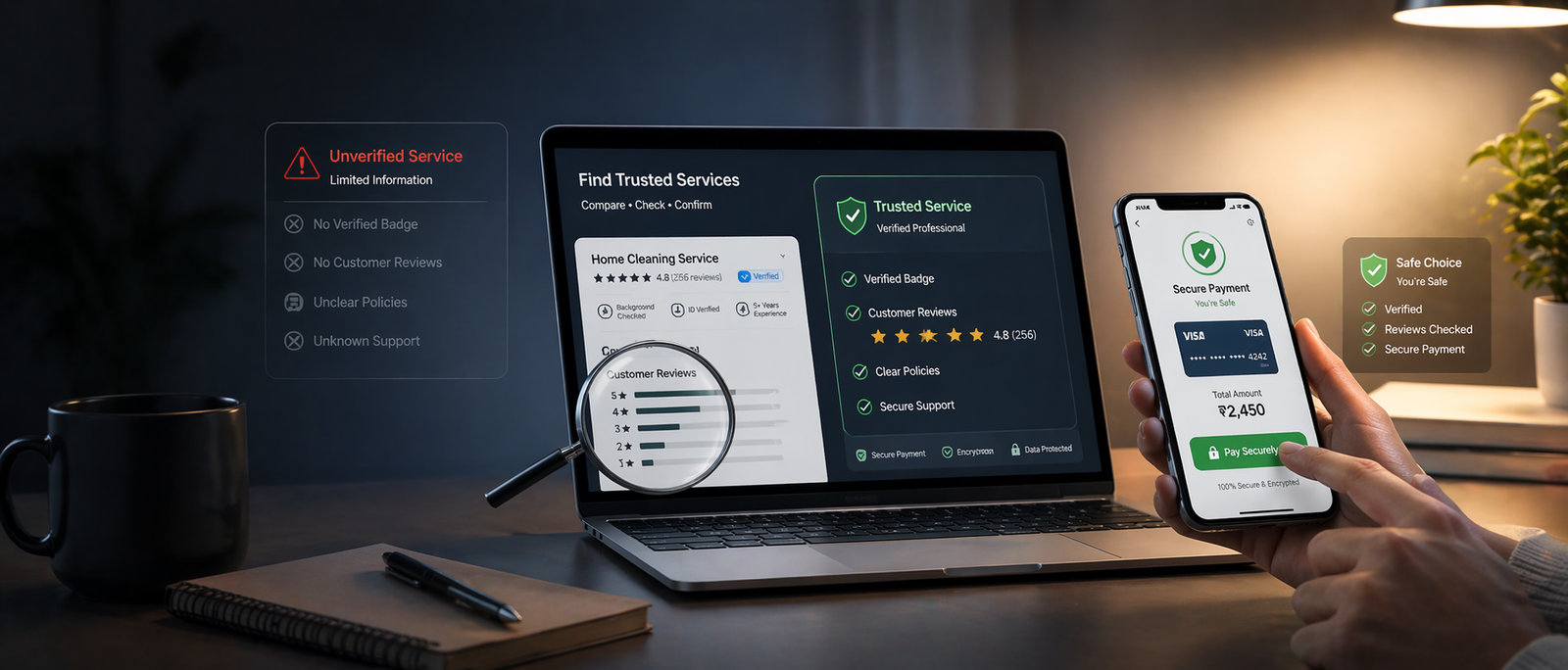
When you are about to hire someone online, the excitement of getting a project started often overrides your caution. I always recommend following a strict verification checklist before you even discuss payment terms. Knowing how to check if a service provider is legit is the only way to protect your capital.
| Step | Action Item | Why it Matters |
|---|---|---|
| 1 | Search Business Name + “Reviews” | Finds public complaints or praise on third-party sites. |
| 2 | Verify GST or MCA Details | Confirms if they are a legally registered entity in India. |
| 3 | Audit the Portfolio | Ensures the work they show is actually theirs. |
| 4 | Check LinkedIn Presence | Real professionals have a history and a network you can see. |
| 5 | Request a Video Call | Scammers often hide behind anonymous chat profiles. |
| 6 | Review the Contract | A legit provider will always provide a written scope of work. |
How to verify a company before payment starts with these basics. If they fail even one of these checks, you should consider it a major warning.
Service scams in India have become highly organized. I have tracked several patterns that fake freelancers and “fly-by-night” agencies use to trap unsuspecting clients. These scams often involve a long “con” where the provider keeps you engaged just long enough to extract multiple payments. Understanding these patterns is the first step in protecting your business. Here are the most common scams you’ll encounter:
This is the most frequent scam targeting small business owners. A “freelancer” will present a stunning portfolio of websites or marketing campaigns that look world-class. In reality, they have simply screenshotted work from platforms like Behance or Dribbble and claimed it as their own. To detect this, always perform a reverse image search on their featured work. If the same project appears under a different name on a global design site, you are dealing with a fake freelancer in India using a stolen identity.
Be extremely wary of agencies that offer “Guaranteed #1 Rankings” or “10x Revenue in 30 days.” In professional services like SEO or performance marketing, no one can guarantee a specific outcome because third-party platforms like Google change constantly. These fake agencies use these “guarantees” as a hook to get you to sign a high-value contract. A legitimate agency will talk about “projections” and “strategy,” whereas a scammer will only talk about “guarantees” to pressure you into a quick deposit.
This scam relies on the client’s excitement to get started. The provider will sound incredibly professional during the initial call, but will insist on a 100% upfront “setup fee” or “software license fee” before the project begins. Once the payment is made, they might send a generic welcome email to keep you quiet for a few days, only to eventually stop replying altogether. This is why I always recommend milestone-based payments. If a provider refuses to work with a 25% or 50% deposit, it is a clear sign they intend to vanish with your money.
If a service provider refuses to communicate via official email or professional tools like Slack or Zoom, you should be concerned. Scammers prefer WhatsApp and Telegram because these accounts can be deleted or changed instantly without leaving a paper trail. They often hide behind generic display pictures and refuse to show their faces on a video call. Legitimate service scams in India often operate from these “shadow” accounts to avoid being tracked by the authorities after they have successfully defrauded a client.
A major red flag is a provider who wants to start work based on a “verbal agreement” or a simple chat message. Without a signed Scope of Work (SOW) or a formal contract, you have no legal standing if they fail to deliver. Scammers avoid contracts because they don’t want to define specific deliverables that could be used against them in a police complaint or a bank dispute. A professional will always insist on a written document that protects both parties, while a scammer will try to keep everything “informal” to stay untraceable.
A “Ghost Provider” is someone who uses the name and registration details of a legitimate, but often defunct, Indian company to appear credible. They might show you a real GST certificate that belongs to a completely different business owner. I have seen cases where scammers use the identity of a closed hardware store to sell “Digital Marketing Services.” You can catch this by cross-checking the “Business Activity” listed on the GST portal. If the legal record says “Retail Trade” but they are selling you “Software Development,“ it is an identity theft scam.
Before you send a single rupee via UPI or bank transfer, look for these signs of scam service providers. These red flags are almost universal across fraudulent operations.
This is a section where many people get confused, but it is actually the most powerful tool you have. If you want to know how to check if a company is legally registered, you have three main avenues in India.
If the provider claims to be a Private Limited, LLP, or One Person Company (OPC), they must be registered with the MCA. You can go to the MCA website and use the “Check Company Name” or “View Public Documents” feature. If they aren’t there, they aren’t a legal company.
Most legitimate service providers in India will have a GST number. You can take their GSTIN and enter it into the GST portal. This will tell you the legal name of the business, the date of registration, and whether their GST status is “Active.” This is a foolproof way to know if a company is legit in India.
Many small service providers and freelancers register under the Udyam scheme. While it is easier to get than a GST, it still provides a level of government-verified identity that scammers usually lack.
A common mistake I see is taking a portfolio at face value. Here is a pro tip: use Reverse Image Search. Take a screenshot of a “featured project” in their portfolio and upload it to Google Images. If that same website or design shows up as the work of a famous agency in New York or London, you have caught a scammer.
When you want to check company reviews before hiring, don’t just look at the testimonials on their own website. Anyone can write those. Search for the company on LinkedIn and look for employees. If an agency says they have 50 employees but only 2 people are on LinkedIn, something is wrong. You can also reach out to their “past clients” listed on their site to see if they actually did the work.
The moment of payment is the highest risk point. If you are wondering how to check if a payment is legit, follow these rules:
Before you commit to a long-term contract or pay a large deposit, you should check what the community has to say. Sometimes, a provider might be legally registered but has a history of taking money and delivering poor work or stopping communication halfway through.
You can check business ratings on TrustGate to see if other clients have flagged a specific freelancer or agency. This transparency is vital in a market where “ghosting” is a common problem.
If you have already had a bad experience or have been outright scammed, you should report fraud here. By documenting your experience, you prevent the scammer from using the same tactics on the next person. Your report helps build a database of unreliable or fraudulent providers that protects the entire Indian professional ecosystem.
If you realise you have been scammed after the payment, do not waste time arguing with the scammer. They will only use that time to move the money out of their account.
Reporting is not just about your money; it is about stopping the cycle. If you are looking for where to report online fraud in India, use these official channels:
Staying safe is about slowing down the process. Scammers thrive on urgency. I follow a simple rule: Verify identity, verify work, and verify payment terms.
Hiring a freelancer or an agency in India is fundamentally an act of trust. You are handing over your hard-earned money and your project goals to someone you might never meet in person. Because the digital service market is so crowded, the burden of proof must always stay on the provider. A legitimate professional will never be offended by your request for a GST number, a written contract, or a verified portfolio. In fact, they will likely appreciate your diligence because it shows you are a serious and professional client.
The most important lesson I can share is this: never let the excitement of a new project blind you to the logistics of a safe transaction. If you feel even a slight hesitation about a provider, take a step back. Use the tools I have shared, check the legal registrations, and look for community feedback. It is far better to delay a project by two days for verification than to lose two months of budget to a scammer who never intended to do the work.
Take Action Today: Before you send that next deposit, take a moment to check business ratings to see what other clients are saying about the provider. If you have been burned by a service scam in the past, report fraud here to ensure your experience becomes a warning for the rest of the community. In the world of online services, your best protection is always your own curiosity.
Your questions about verifying businesses and services in India, answered.
The most reliable way is to look for third-party verification. Check their LinkedIn profile, look for real client mentions on social media, and see if they have any ratings on platforms like TrustGate. A legit service will always have a traceable history of work.
In India, use the MCA portal for Private Limited companies or the GST portal for any business claiming to be tax-registered. If they don’t have these, check for a physical office address and a verified Google Business Profile with real customer photos.
You can visit the official Ministry of Corporate Affairs (MCA) website and enter the company name in the search bar. For sole proprietorships, you can verify their GSTIN or Udyam number on the respective government portals.
A “real” company should have an active GST status, a professional office location, and a verifiable presence on professional networks like LinkedIn. You should also check for a valid “About Us” page that lists real founders and team members rather than stock photos.
Yes, checking the GST portal, MCA website, and TrustGate ratings are all free methods. These tools allow you to verify the legal and social standing of a business without spending a rupee.
Common red flags include no verifiable physical address, a website with no team or founder information, a domain registered within the past few months, and customer service that only communicates via WhatsApp or personal email IDs. Be especially cautious if a company asks for full payment upfront with no written contract or invoice.
Ask for their GSTIN if they charge GST, or their Udyam registration number if they claim to be an MSME. Look for a portfolio with verifiable client names, check their LinkedIn for endorsements, and search for their name or brand on TrustGate to see if any complaints have been filed. A trustworthy freelancer or small business will have no issue sharing these details.
Not automatically. A website alone costs very little to set up and can be created overnight. A legitimate business typically has some form of independent online presence — a Google Business Profile with reviews, a LinkedIn company page, or mentions in news or directories. If the only trace of a company is its own website, treat it with caution and verify their registration details on the MCA or GST portal before engaging.


I have noticed a significant shift in how we work in India lately. More businesses and individuals are hiring freelancers,…

I remember when online shopping in India was just about a few big names. Now, I see new stores popping…

Finding a reliable way to manage a sudden cash crunch has become significantly easier for Indians in recent years. By…