How to Check if a Service Provider is Legit Before You Pay (India Guide)
I have noticed a significant shift in how we work in India lately. More businesses and individuals are hiring freelancers,…
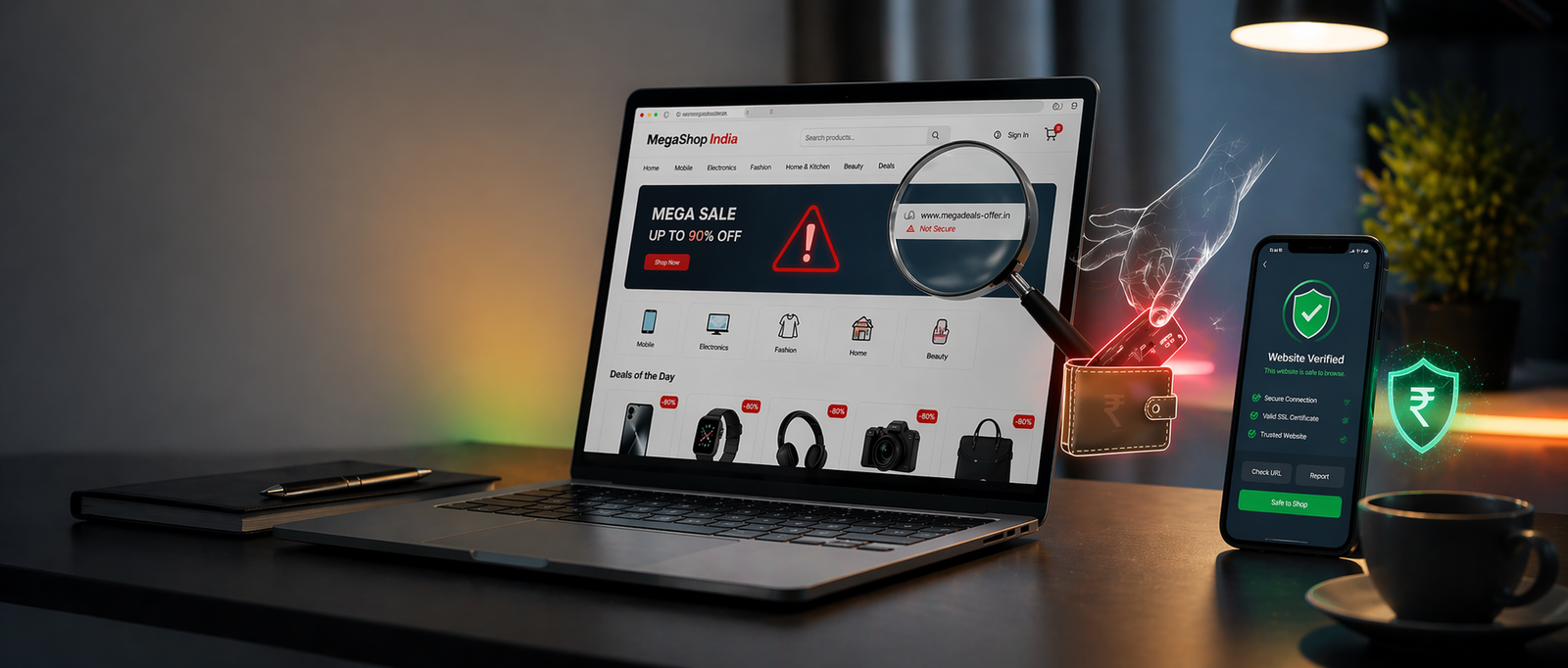
I remember when online shopping in India was just about a few big names. Now, I see new stores popping up every day on my Instagram feed. While the variety is great, it has also opened the door for a massive wave of online scams. Over the last year, I have noticed that these fake stores are becoming incredibly sophisticated. They don’t just look real; they mimic the entire user experience of a premium brand.
The reality is that anyone can get caught if they aren’t looking for the right red flags. In this guide, I will walk you through how to identify fake shopping websites, how to verify a business before you pay, and exactly where to report online shopping fraud in India for free. If you’re hiring a freelancer or agency instead of buying products, see our guide on how to check if a service provider is legit before you pay.
The digital landscape in India has changed rapidly. With the explosion of UPI and cheap data, millions of people are shopping online for the first time. Scammers know this, and they are evolving their tactics.
If you want to know how to identify fake e-commerce websites in India online, you need to look at the details. Most fraudulent sites share at least three or four of these characteristics, and recognizing them can save you from a major financial headache.
I always tell people that if the price doesn’t make business sense, it’s probably a trap. Legitimate luxury brands or high-end electronics rarely offer 90% off because their manufacturing and acquisition costs are simply too high. These extreme discounts are usually just bait to harvest credit card data or collect quick UPI payments before the site is taken down and moved to a new domain.
A real Indian business is legally expected to provide clear contact information. If you only see a generic contact form or a random Gmail address without a physical office location or a registered Indian phone number, be wary. I personally check for a “Contact Us” page that lists a verifiable address in India, as most scam sites use vague locations or none at all.
Scammers operate on a “hit and run” model where they register a domain, run heavy ads for a few weeks, and then disappear. You can use free WHOIS tools to see exactly when a site was registered. If a store claiming to be an “old and established brand” was actually registered just 15 days ago, you are likely looking at a fraudulent setup designed to vanish after a single festive sale.
Professional brands invest heavily in their site architecture and user interface. On fake sites, you will often find low-quality images, spelling mistakes, or navigation links that lead to nowhere. If you click on the “Privacy Policy” or “Shipping Info” and the page is blank or filled with placeholder text, it’s a sign that the site was thrown together quickly by a scammer.
A clear, legally compliant return policy is a hallmark of a trustworthy Indian e-commerce site. Scammers usually keep their policies intentionally vague or don’t include them at all because they have no intention of honoring a return. Always read the fine print to see if there is a functional process for refunds before you commit your hard-earned money.
While many legitimate brands are moving toward prepaid models, fake sites often force prepaid payments via UPI or credit cards. They do this because they want the money secured before you realize the product isn’t coming. If a site offers “Cash on Delivery” but the option is “currently unavailable” at checkout, consider it a major red flag for a potential scam.
Be skeptical of reviews that all look the same. If every single review is 5 stars, posted on the same date, or written in broken English with generic names, they are likely generated by a bot. I prefer to look for reviews on independent platforms where the business cannot delete negative feedback, as this gives a much more honest picture of their service.
Look closely at the URL in your browser bar. Scammers often use “Typosquatting,” which involves registering names that are very similar to famous brands, like amaz0n-india.in or tatacliq-offers.com. These subtle misspellings are designed to trick your eyes during a quick mobile search, so always double-check the spelling before entering any personal data.
A modern, legitimate brand in India will almost always have an active presence on Instagram, Facebook, or LinkedIn. If the social media icons on the website don’t link anywhere, or if the Instagram page has 10,000 followers but zero comments on their posts, it is a sign of a “ghost” brand. Real businesses engage with their customers in the comment sections.
Always look for the padlock icon next to the URL, which signifies an SSL certificate is active. Beyond that, be wary of “Trust Badges” from companies like McAfee or Norton that are just static images. On a real site, you should be able to click those badges to see a live verification certificate. If it’s just a non-clickable picture, the site is trying to fake its credibility.
To stay safe, I follow a simple verification routine. For a comprehensive breakdown of these red flags, you can read my full step-by-step guide on Lentlo. Here is how you can check if an online website is real before you enter your payment details:
Before purchasing from an unfamiliar website, it’s important to see what other users are saying about the business. Instead of relying only on the website itself, you can use independent platforms to verify credibility.
TrustGate allows users to check business ratings, read real customer reviews, and identify potential red flags before placing an order. You can also submit a review to help others understand your experience with a brand.
You can quickly search for a business and view:
I recommend browsing through the business directory to see which companies are verified. You can also check business rating here before you hit the “Pay” button. This helps you avoid risky or newly created websites that may not be trustworthy.
If you come across a suspicious website or have already been scammed, you can report it to help others stay safe. On TrustGate, users can:
If you have been targeted, you should report fraud here. Reporting scams not only helps you take action but also builds a safer online ecosystem for other users.
At TrustGate, we have analyzed thousands of reports from Indian consumers who fell victim to sophisticated online scams. When a business is legitimate but has poor service, people use words like “slow delivery” or “bad customer support.”
But when a site is a true scam, the vocabulary changes completely. The reviews move beyond complaints and use high-emotion, critical words like “Cheated” and “Scam.”
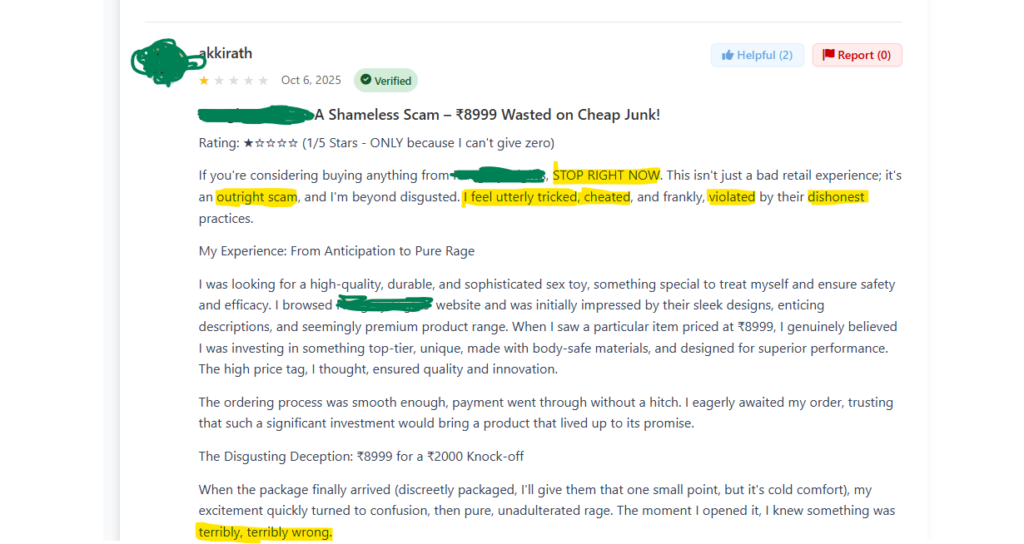
Look closely at the highlighted words in this review for a sensitive, high-priced item:
By analyzing these patterns, you can learn to spot these emotional red flags in third-party reviews before placing an order.
The Vocabulary of a Victim: Common Red Flags in Customer Reviews:
| Keyword | Context | Risk Level |
|---|---|---|
| “Looted” | Usually used when the payment was made via UPI but no tracking was sent. | Critical |
| “Cheated” | Often used when a fake product (or a different item) is delivered via COD. | High |
| “Scammer” | Typically seen when the website and WhatsApp support go “dark” after payment. | Critical |
If you are looking for a fake website checker online, there are several reliable options. I have listed the best ones in the table below.
| Tool Name | What it Checks | Best For |
|---|---|---|
| Google Safe Browsing | Malware and phishing status | Checking if Google has flagged the URL as dangerous. |
| ScamAdviser | Domain age, ownership, and server location | Getting a “Trust Score” for a new website. |
| WHOIS Lookup | Registration date and owner info | Verifying how long the site has been active. |
| VirusTotal | Scans URL against 70+ antivirus databases | Identifying hidden malware or phishing scripts. |
| URLVoid | Website reputation and blacklists | Checking if the site is on any global fraud lists. |
Rather than looking for a specific “fake online shopping websites list,” it is better to understand the patterns. Scammers change their names every week, but their methods remain the same.
When you are trying to find website rating sites for small businesses, always ensure the platform uses verified feedback.
If you realize you’ve made a mistake, you have to act fast. Every minute counts when it comes to stopping a transaction.
If you are wondering where to report online shopping fraud in India for free, the government has set up several dedicated channels.
I follow a few “golden rules” to ensure I never fall for these traps:
Navigating the Indian e-commerce space in 2026 is exciting because of the endless variety, but it requires a “security-first” mindset. Scammers are no longer just amateurs; they are sophisticated operators using high-end design and psychological tricks to separate you from your money.
As we’ve seen, identifying a fake website isn’t about one single red flag, it’s about looking at the big picture. From checking the domain age and GST details to analyzing the “vocabulary of a victim” in reviews, your best defense is a healthy dose of skepticism. If a deal feels too good to be true, or if a site is pressuring you into a prepaid payment without any social proof, it is always better to walk away.
Don’t let the fear of scams stop you from enjoying the convenience of online shopping. Just ensure that before you hit that “Pay” button on a new store, you take 60 seconds to verify their credibility.
Your Turn: Have you encountered a suspicious website recently? Help protect the community by reporting fraud here or sharing your experience to help others shop safely.
Everything you need to know about spotting fake online stores and protecting your money.
The fastest way is to check the domain age and verify the business’s physical address and GSTIN. Legitimate Indian businesses must display their GST details. You should also search for the brand on independent review platforms like TrustGate to see if other users have reported issues with orders or refunds.
Look for “too good to be true” prices, such as high-end smartphones or designer clothing at 80–90% off. Additionally, check for broken links on the website, a lack of a working customer service number, and a “Recently Registered” status in WHOIS records. Fake sites often use stolen imagery from high-end brands but provide no real social media proof.
There is no single official “blacklist” because scammers change their names daily. However, you can check the Ministry of Corporate Affairs (MCA) portal for registered companies or use a business directory to see verified ratings. If a company claims to be a private limited firm but isn’t on the MCA portal, it is likely a fraud.
Yes, there are several reliable free tools. You can use Google Safe Browsing to check for phishing reports, ScamAdviser for a trust score, and WHOIS to see the site’s registration date. For Indian-specific stores, checking the TrustGate report fraud section is highly effective for seeing recent victim reports.
It is difficult but possible if you act within the “Golden Hour” (the first 60 minutes). Immediately call the National Cyber Crime Helpline at 1930 and report the transaction on your UPI app (Google Pay, PhonePe, etc.). You should also contact your bank to raise a formal dispute, as they can sometimes freeze the funds before the scammer withdraws them.
Credit cards offer the strongest buyer protection because you can raise a chargeback with your bank if goods are not delivered. Cash on Delivery (COD) is the safest option for first-time purchases from an unfamiliar store, since no money leaves your account until the package is physically in your hands. Avoid direct bank transfers or UPI payments to unknown sellers, as these are nearly impossible to reverse.
On Amazon, click the seller’s name on the product page to see their storefront, ratings, and how long they have been selling. On Flipkart, look for the “Seller Info” section on the product listing. Be cautious of sellers with fewer than 50 ratings, no return policy, or listings that were created very recently. Even on trusted marketplaces, individual third-party sellers can be fraudulent.
Yes. HTTPS only means the connection between your browser and the website is encrypted — it does not mean the website itself is legitimate. Scammers routinely get free SSL certificates (the padlock icon) for their fake stores. Always check the domain name carefully for typos, verify the business registration, and look for independent reviews before trusting any site with your payment details.


I have noticed a significant shift in how we work in India lately. More businesses and individuals are hiring freelancers,…

I remember when online shopping in India was just about a few big names. Now, I see new stores popping…

Finding a reliable way to manage a sudden cash crunch has become significantly easier for Indians in recent years. By…